
A new era
of tech lifecycle
of tech lifecycle
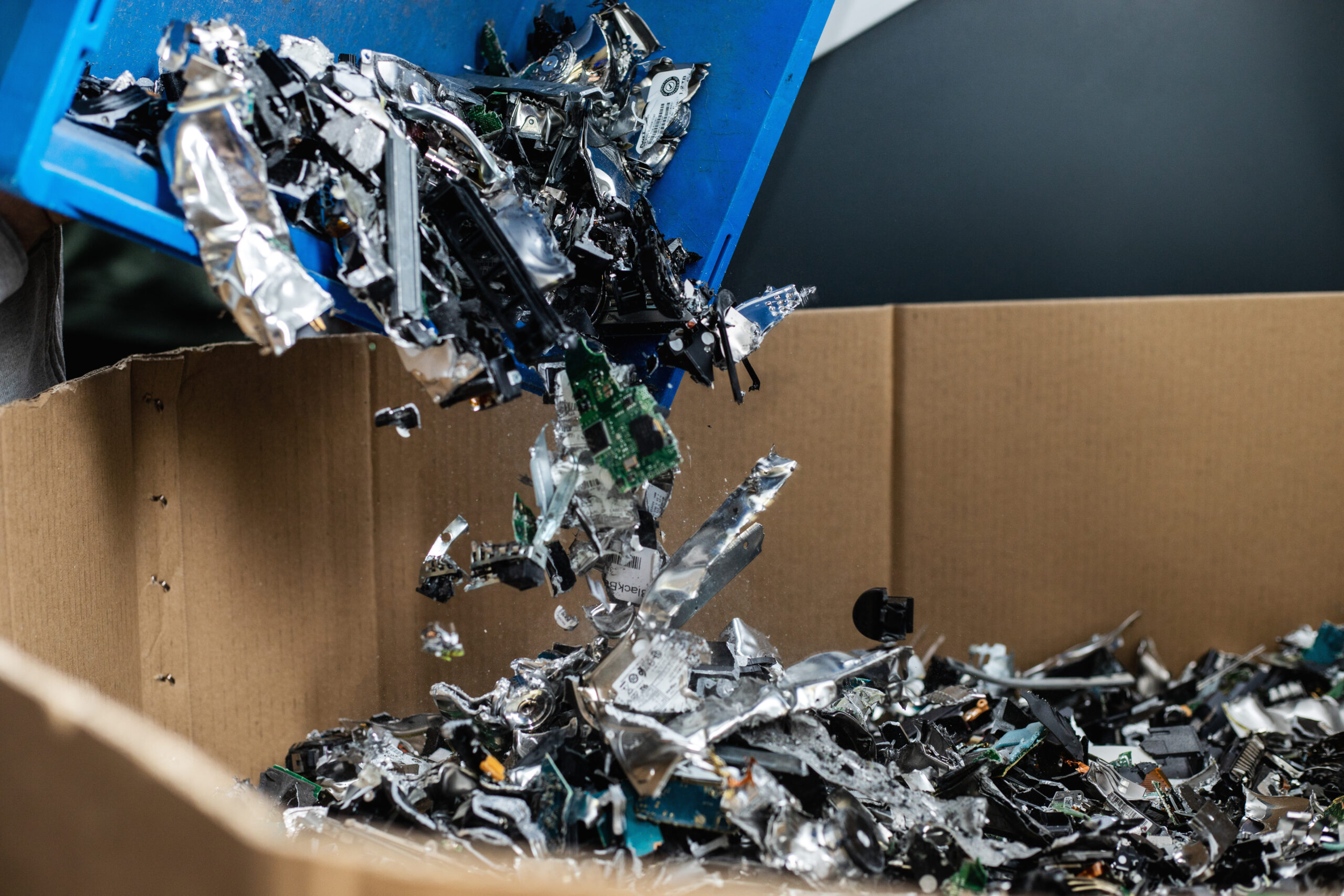
Original source here.
AI is a major contributor to e-waste mountains that continue to grow exponentially. So, to mark International E-Waste Day today (14 October), we explore what organizations can do about this major environmental challenge.
The international e-waste challenge is getting worse not better, exacerbated by growing digitization and the adoption of resource-hungry technologies, such as AI. To illustrate the point, a record 62 million tonnes of e-waste was produced in 2022, according to the fourth Global E-waste Monitor from the United Nations Institute for Training and Research. This is enough to fill 1.55 million 40-tonne trucks. The figure is up a huge 82% from 2010, with 2.6 million more tonnes appearing each year. As such, the situation is on track to hit 82 million tonnes by 2030, a 33% jump on the 2022 figure. To make matters worse though, recycling activities are failing to keep pace. A mere 22.3% of 2022’s e-waste was documented as having been properly collected and recycled.
This means it is unclear what has happened to $62 billion’s-worth of recoverable natural resources, including rare-earth minerals. But the situation is undoubtedly leading to an increased risk of environmental pollution, due to at least some of these resources ending up in landfill. The report also forecasts that due to this massive growth in e-waste generation, recycling rates are likely to fall proportionately to 20% by 2030. In other words, the amount of e-waste being produced around the world will rise five times faster than collection and recycling activities.
On the business side of the equation, a key contributor to e-waste generation is the rapid adoption of AI. Oliver Mason is Managing Director of KOcycle, which recycles, refurbishes and remarkets IT equipment. To illustrate the point, he refers to the fact that Microsoft is ending support for Windows 10 next year to clear the way for “AI-powered devices”.
But because the decision will force many organizations with older PCs to upgrade their hardware, the move is expected to lead to a “boom in hard-to-dispose-of electronic waste”. Mason says:
”E-waste generation certainly isn’t slowing down due to technologies like AI as it leads to higher CPU, GPU and memory demand, which means more technology becomes obsolete…So, the e-waste crisis remains and is growing significantly.”
Fred Forslund, Vice President and General Manager of International at Blancco, which specializes in data erasure and computer reuse, agrees:
”It’s not something that’s going away by any means – it’s a continually rising problem. There’ll be a spike based on system requirements from those at the forefront, so the tech refresh level will increase this year and over the following years. We know the spike is coming and will strengthen over coming years, which means it will absolutely need to be paralleled with an increased awareness of how the technology lifecycle and reuse market work.”
Jonmichael Hands is Secretary and Treasurer at the Circular Drive Initiative (CDI), a partnership of technology companies promoting the secure reuse of storage hardware. He points to a recent study, which indicates that Big Tech (Alphabet, Amazon, Meta and Microsoft) have spent more than $150 billion in capital expenditure (capex) terms over the last 12 months, primarily on AI infrastructure:
”So, the magnitude of AI spend is in the hundreds of millions of dollars, and they keep telling people we’re nowhere close and it’ll increase times 10 and times 10 again. The stakes for global dominance are very high and they think AI is going to solve all the world’s problems. The promise for the hyperscalers if they can get to the end-state is that huge problems like e-waste and climate change can be solved using it.
That’s how they justify such high levels of data center expenditure, and they’re all competing against each other to see who can get there first. The magnitude of capex build out on infrastructure is nothing like we’ve ever seen before or will ever see again.”
The problem here is the vast amount of both resources and e-waste this approach both uses and generates. Much of it is driven by the hyperscalers, large data centre operators and banks shredding equipment, such as storage devices and hard drives, after three to five years of use. Hands explains:
”The hyperscalers all say the same thing. Their brand reputation is too important to have a private data leak, so they can’t let data leave the data center. This is the core root of the problem. They’re paranoid data will leak and they’ll face reputational damage as they host so much data for big companies in the cloud.
They don’t want people not to trust the cloud because someone’s bought a hard drive with customer data on it, so they destroy everything.”
Indeed, Hands says that “almost all hard drives are being shredded today”. But looking on the bright side, Forslund points to “rising awareness” of the challenge over recent years, within large organizations at least. He explains:
”For example, we’re seeing certain government procurement agencies stipulating now that X% of IT equipment must be refurbished, which has a huge impact. The new accounting rules in the European Union’s CSRD [Corporate Sustainability Reporting Directive] will also make a big difference in terms of sustainability and how large organizations report on it.
They’ll have to understand the things they’re bringing in and sending out, and when they send things out, where it goes and what’s happening to it, so is it being sent for shredding, recycling or reuse?”
Hands also cites Microsoft’s pledge to disassemble 90% of its decommissioned hard drives by 2025 so they can be recycled and reused. But he also warns that recycling is not always the solution it is cracked up to be either:
”Just looking at the amount of dollars saved isn’t necessarily useful here because there are rare-earth minerals that can be difficult to recycle. One study said that, while it seems like recycling is a good thing, it’s important to break equipment down into its component parts and sort them into categories. And it showed that reuse is 275 times better than recycling in terms of carbon impact. So, you need to do a full lifecycle assessment.
If you do that, you’ll know where the difficult areas to fix are. It’s about getting value for money. Otherwise, the danger is that if you have to spend a lot of dollars, effort and carbon going through the dust to sort things, it’ll end up with more shredding and you’ll get more e-waste.”
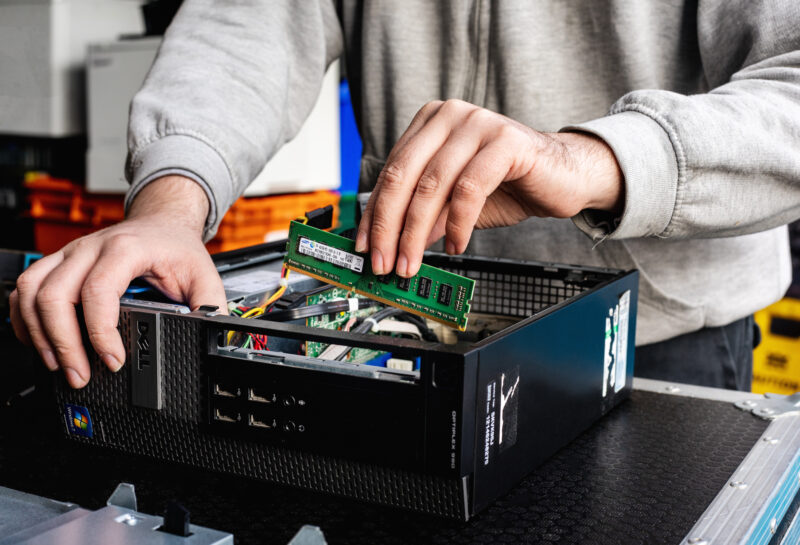
As a result, Hands’ advice is to go for reuse where possible, which involves tackling the problem “higher upstream”. Firstly, it entails classifying data into high, medium and low security categories and deciding what to do with storage devices and hard drives on that basis. It also means employing industry standards, such as IEEE-2883, to safely erase data from devices and drives that have been designated for reuse – which should consist of the majority. The CDI has developed tools and guidance to this end. The upshot of this approach is that such equipment can then be sold on, for example, to third party organizations in emerging markets, which “don’t need the newest and greatest but are looking for something more cost-effective”, Hands says. Forslund takes a similar stance:
”Reuse is the most critical part of the sustainability equation – the longer the lifecycle, the better the sustainability.”
While reuse makes a lot of sense when trying to reduce e-waste, there is also value to be had from encouraging product vendors to adopt a more modular design approach. This would means components could replaced, recycled, or reused at all levels as and when required. As Mason says:
”It would mean all hardware could have a second life and not end up in landfill. From a hardware vendor standpoint, their hands are starting to be forced by legislation, but they’re moving as slowly as possible as it doesn’t help them. Their aim is to sell as much product as possible. But change will come, and we’ll see real movement in the next five to six years, as consumers are requiring it.”